
Security Insights
Deep dives, expert analysis, and practical guidance on exposure management, adversarial validation, and the future of AI-driven exposure management.
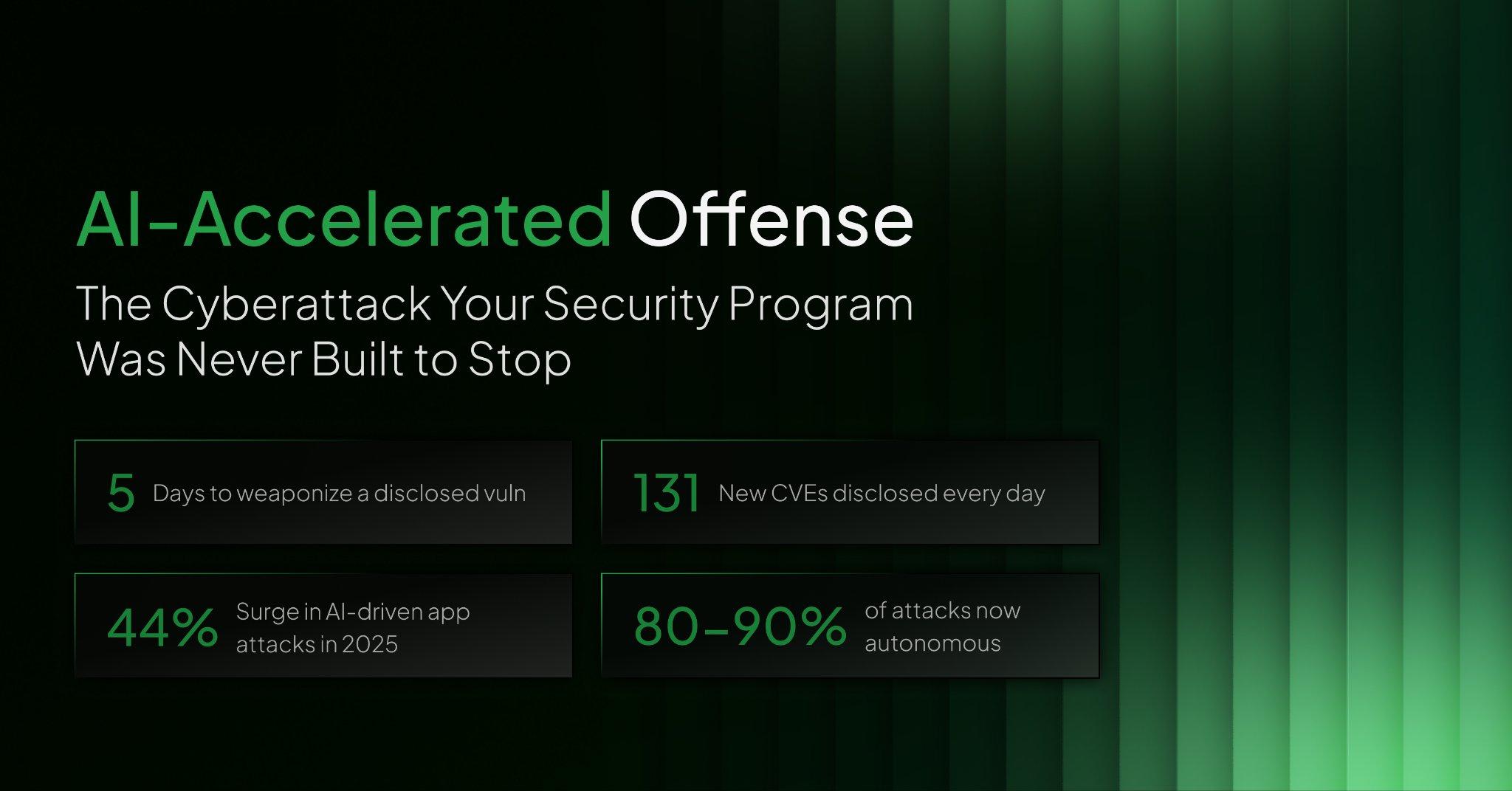
AI-Accelerated Offense: The Cyberattack Your Security Program Was Never Built to Stop
AI-Accelerated Offense uses autonomous agents to run the full cyberattack chain in hours. A frontier AI model found thousands of zero-day vulnerabilities across every major OS and browser in weeks. See how it works, why your security program is already behind, and what to do now.

HIPAA Penetration Testing Requirements
HIPAA never says "penetration test," but the Security Rule's risk analysis and its REQUIRED evaluation standard expect technical testing of every system touching ePHI. Here is the precise read.
SOC 2 Penetration Testing Requirements
SOC 2 never names penetration testing in any criterion, yet auditors treat it as the load-bearing evidence for CC4.1 and CC7.x. Here is the gap between the letter and the audit.
How Strobes AI Turns a Supply Chain Zero-Day into a Full Exposure Assessment in Under 30 Minutes
When the axios npm package was compromised on March 31, 2026, Strobes AI agents autonomously performed incident response, identified every exposed repository across the attack surface, and generated a complete exposure assessment with remediation tasks in under 30 minutes.
Axios npm Supply Chain Attack: 83M Weekly Downloads Compromised by Cross-Platform RAT
On March 31, 2026, attackers compromised the axios npm maintainer account and published backdoored versions deploying a cross-platform RAT to macOS, Windows, and Linux. Full incident breakdown with IOCs, detection guidance, and real-time AI-driven response.
How to Write an Effective AI Agent Skill: The Four-Layer Architecture
Most teams building AI agents get the ratio wrong: 90% code, 10% methodology. Here is the four-layer architecture Strobes uses to build skills that run complete security assessments autonomously.
Building an AI Harness for Offensive Security: What It Takes to Turn LLMs Into Reliable Pentest and Validation Operators
The model is 20% of the problem. Here is the engineering story behind the orchestration, tooling, middleware, and infrastructure that turns a capable LLM into a reliable penetration testing operator.

Exposure Assessment vs Adversarial Exposure Validation
Your security team just delivered another quarterly report. 847 vulnerabilities discovered. 23 rated critical. 156 high severity. CVSS scores assigned. Remediation priorities set. And yet, like last quarter, the backlog grows faster than your team can patch. Worse, you're left wondering: are we fixi

Why Deduplication Is the Most Underrated Security Control
Security teams face constant pressure from an overload of alerts and findings. Every new scanner or assessment adds to the pile, making it hard to focus on what matters. Instead of streamlining efforts, these tools often create more confusion by repeating the same issues across reports. This is wher

How ASPM Protects Cloud-Native Applications from Misconfigurations and Exploits
Cloud-native applications have changed how businesses build and scale software. Microservices, containers, and serverless architectures enable faster and more flexible development, but they also make the environment more challenging to secure. Misconfigurations have quietly become one of the biggest

Social Engineering Penetration Testing Guide
A social engineering penetration testing field guide: building an OSINT pretext, running an authorized GoPhish campaign, mapping to MITRE ATT&CK T1566, and the metrics that prove resilience.

CVE-2025-55182: React2Shell RCE Demands Immediate Security Action
React2Shell exposes a fundamental flaw in how React Server Components interpret untrusted data, turning a routine hydration step into a reliable remote execution pathway. Introduction If you work with React, Next.js, or any framework that leans on React Server Components (RSC), this is the one vulne