
Security Insights
Deep dives, expert analysis, and practical guidance on exposure management, adversarial validation, and the future of AI-driven exposure management.
Vulnerability Validation: Why Most of Your Scanner Backlog Is Noise
Vulnerability validation proves which scanner findings are real, reachable, and exploitable. Why manual triage fails and how agentic validation scales.
Top CVEs of May 2026: 5 Critical Flaws to Patch Now
Five CVEs dominated May 2026: cPanel's two-month zero-day, Linux's stealth kernel priv-esc, Langflow exploited 20 hours after disclosure, n8n's perfect-10 RCE chain, and Microsoft's SSO bypass. Here's what happened and what to do.
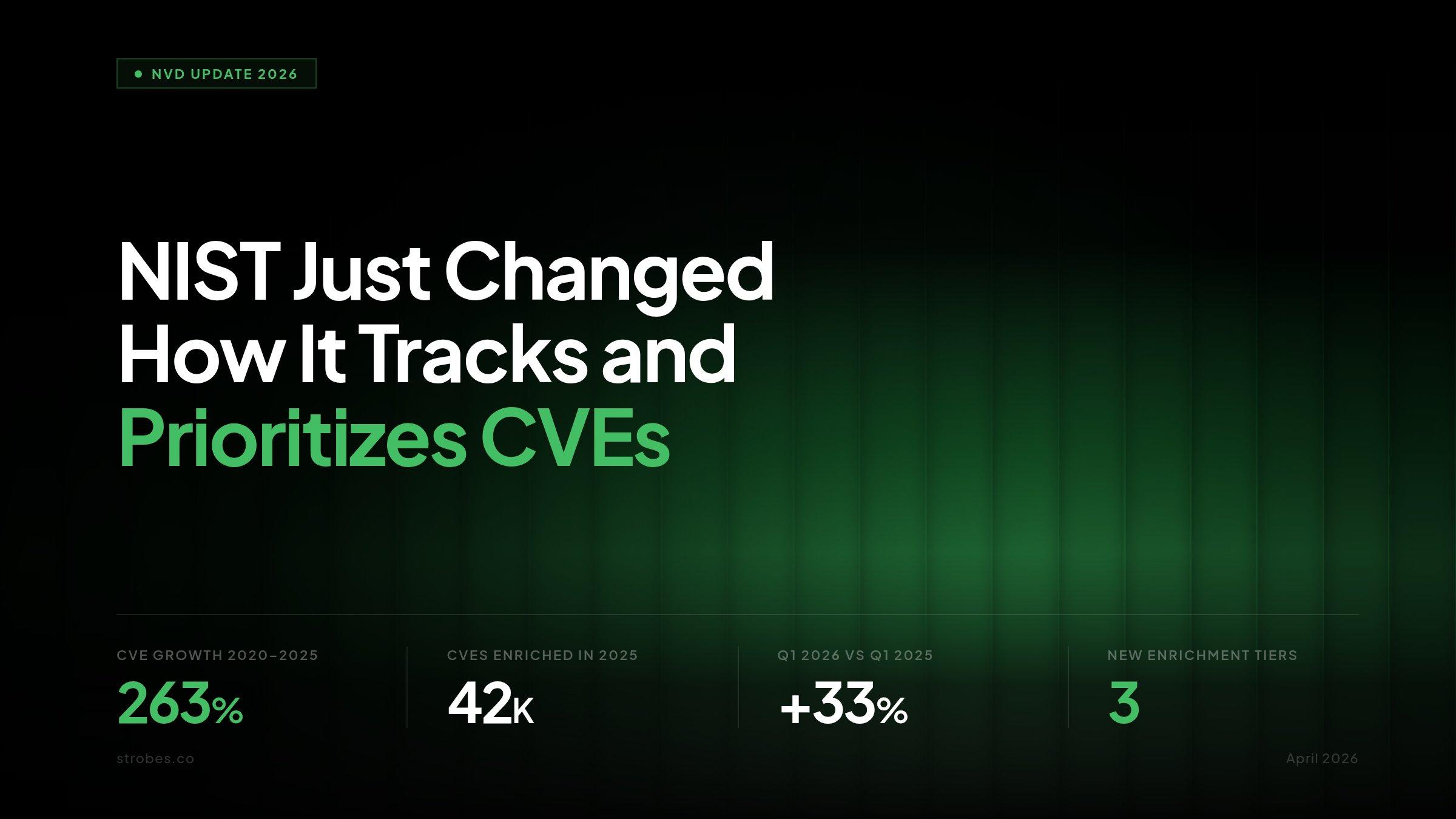
NIST Just Changed How It Tracks and Prioritizes CVEs
NIST has changed how it enriches CVEs in the NVD. Learn what the new risk-based triage model means for your vulnerability management program, scanner data, and remediation workflows.
A Poisoned PyPI Package Quietly Hit 36 Percent of Cloud Environments Through LiteLLM
LiteLLM 1.82.7 and 1.82.8 silently swept AWS credentials, Kubernetes configs, and SSH keys from 3.4 million daily installs. Here is exactly what the payload did and how Strobes AI detects and shuts it down.
What is an Exposure Assessment Platform? The Complete Guide for Security Leaders
An Exposure Assessment Platform (EAP) is the connective tissue that unifies, normalizes, prioritizes, and mobilizes remediation across your entire attack surface. This guide covers how EAPs work, why they replace traditional vulnerability management, and how to evaluate one for your CTEM program.

Threat Modeling Explained: STRIDE and Methodology
Threat modeling finds design flaws on a whiteboard, before code exists. A worked STRIDE pass on a login system, attack trees, and why DREAD lost favor.

6 Ways CISOs Are Using AI to Prioritize Critical Vulnerabilities
Just like AI is transforming business operations, it’s revolutionizing how CISOs handle vulnerabilities. AI-powered vulnerability prioritization helps reduce alert noise, focus on high-risk issues, and automate remediation, enabling security teams to act faster, stay ahead of threats, and strengthen

Patch Management vs Vulnerability Management: What’s the Difference?
Many organizations struggle with security gaps even after investing in different tools and processes. One of the most common reasons for breaches is the presence of unresolved weaknesses in systems. A report by Ponemon Institute highlights that 60% of organizations experiencing a breach in 2024 admi

Vulnerability Management Best Practices for Enterprise Teams
Do you know? More than 40,000 new software vulnerabilities were disclosed in 2024, 61% surge from 2023 while the number of actively exploited vulnerabilities nearly doubled. Such volume translates into thousands of exploitable risks waiting in your systems. Industry data shows that 30% of security i

Exposure Management vs Vulnerability Management - The Truth No One Tells You
Enterprises have poured time and resources into vulnerability management programs. Scanners sweep across networks and clouds, producing endless lists of issues to patch. On paper, this feels like control. In practice, teams are overwhelmed and attackers keep finding ways in. Vulnerability management

Why Fixing Every Vulnerability Is Wasting Time and Your Team’s Budget
We have discovered 10,000 vulnerabilities this year. Great, now what? This sounds like a lot of work has been done, but in reality, it is just noise, not a signal. After every scan, you get a massive list of CVEs, misconfigurations, and alerts but without prioritization and targeted vulnerability fi

How to Prove the ROI of Your Vulnerability Management Metrics to the Board?
The ROI of Vulnerability Management comes down to the metrics—these might sound boring, but they are the magic numbers that decide whether security spending should be considered a cost or a value investment. “In our last board meeting, I talked about exploit trends and threat intel for 20 minutes st