
Security Insights
Deep dives, expert analysis, and practical guidance on exposure management, adversarial validation, and the future of AI-driven exposure management.
Tooling as Code and Structured Scratchpads
The two changes that moved our AI security agents furthest this year had nothing to do with the model. Here is how tooling as code and structured scratchpads reshaped how the agents act, and how they prove a finding is real.
Human-in-the-loop security: why AI findings need human validation
An AI pentester can hand you a critical finding in minutes. The only question that matters is whether you believe it. Here is why human validation turns a claim into proof.
How Agentic Pentesting Separates Test Failures From Real Security Findings
Agentic pentesting reliability on unstable apps: a six-state failure taxonomy, safe retry rules, and what a trustworthy pentest report must disclose.
Pentesting In-House vs. Outsourcing: Cost, Coverage, and the Third Option
Compare in-house vs outsourced pentesting on cost, coverage, and depth. Discover why AI pentesting is the third option that changes the math for security teams.
DAST vs. Pentesting vs. AI Pentesting: What Each One Actually Finds
Compare DAST, manual pentesting, and AI pentesting. Learn what each approach finds, misses, costs, and when to use each for full application security coverage.

5 Vulnerabilities in Every Vibe-Coded App
The 5 security flaws AI coding assistants ship by default: missing authz, leaked secrets, weak JWTs, IDOR, eval RCE — with detection queries and fixes for each.
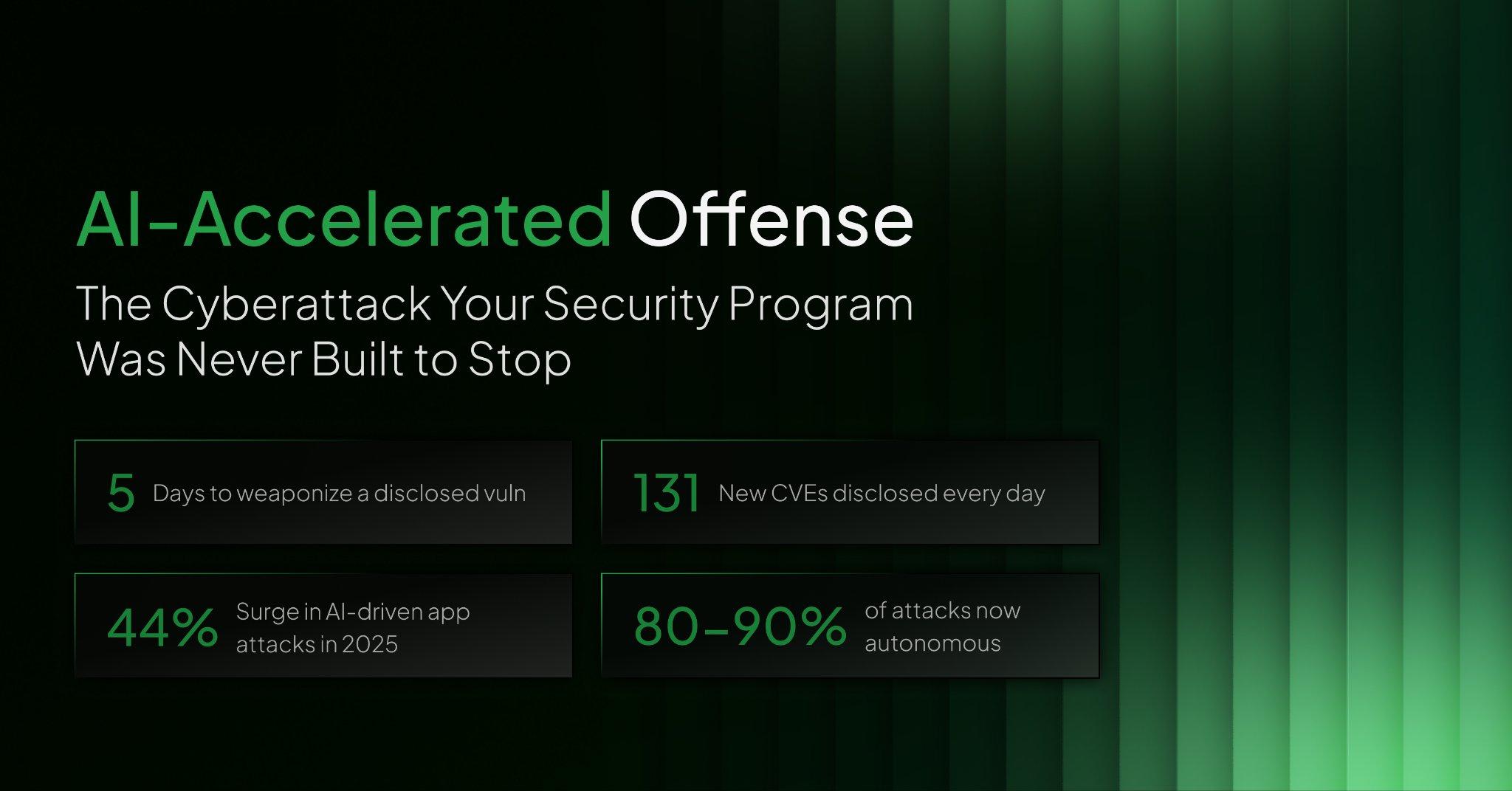
AI-Accelerated Offense: The Cyberattack Your Security Program Was Never Built to Stop
AI-Accelerated Offense uses autonomous agents to run the full cyberattack chain in hours. A frontier AI model found thousands of zero-day vulnerabilities across every major OS and browser in weeks. See how it works, why your security program is already behind, and what to do now.
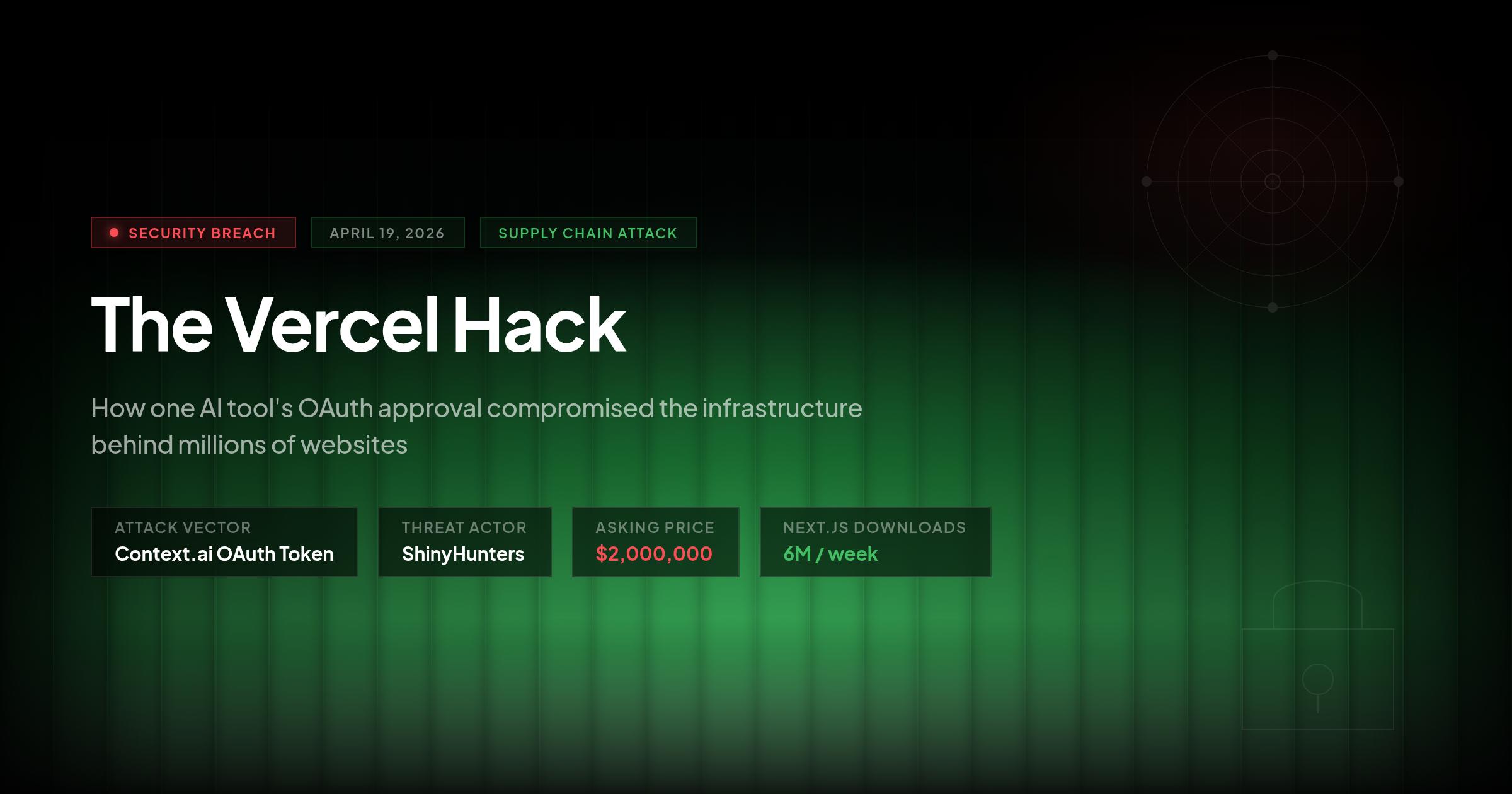
The Vercel Hack: How One AI Tool Compromised the Infrastructure Behind Millions of Websites
Vercel's April 2026 security breach started with one AI tool's OAuth approval. Here is the full attack chain, blast radius, and what every security team must do now.
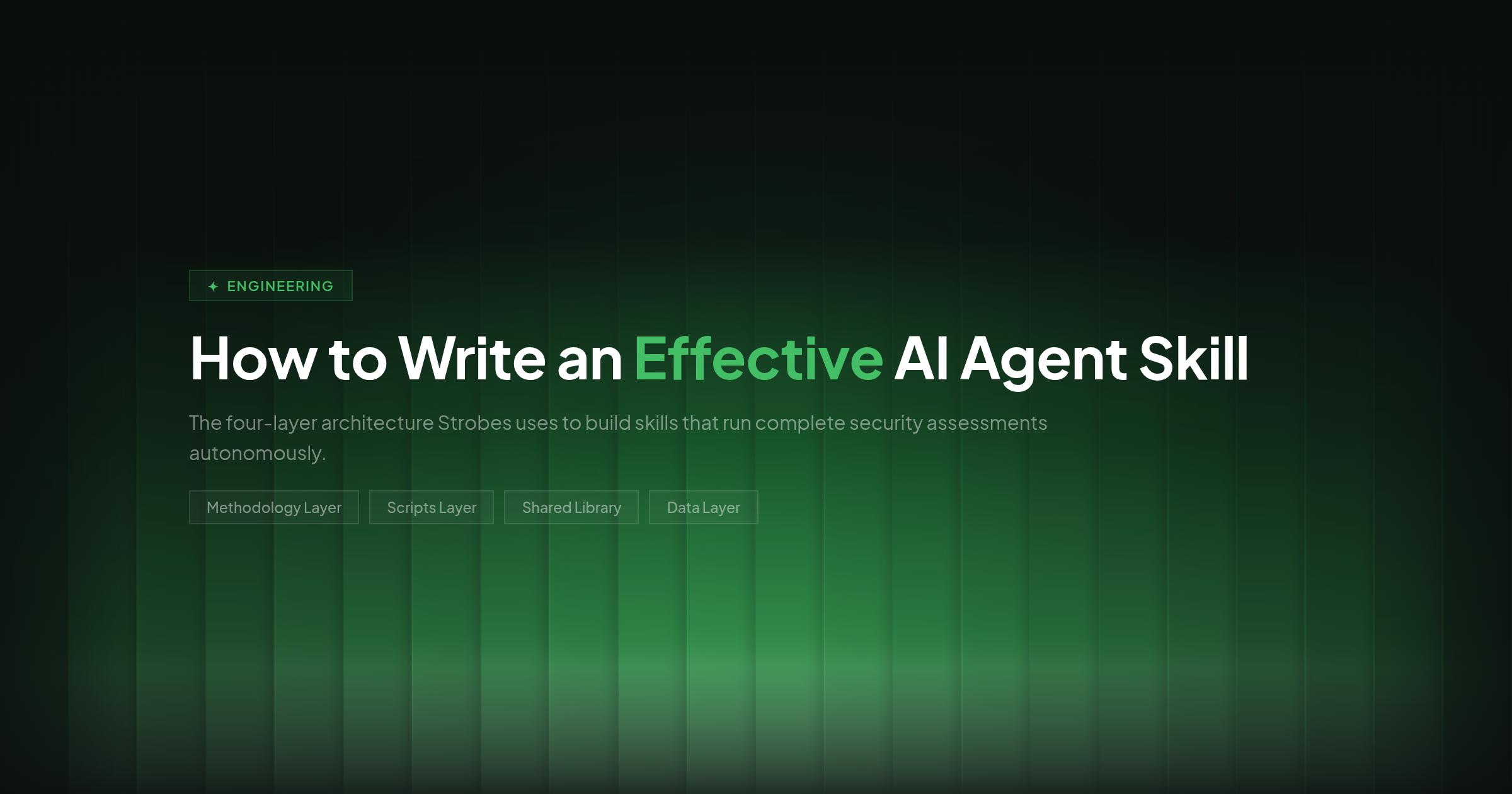
How to Write an Effective AI Agent Skill: The Four-Layer Architecture
Most teams building AI agents get the ratio wrong: 90% code, 10% methodology. Here is the four-layer architecture Strobes uses to build skills that run complete security assessments autonomously.
Strobes AI: The Agent Stack Specialized for Offensive Security
A deep-dive into the multi-agent architecture behind Strobes AI — 12 purpose-built offensive security agents, the Skills system, Human in the Loop governance, and the architectural properties that make continuous exposure management viable at scale.
Building an AI Harness for Offensive Security: What It Takes to Turn LLMs Into Reliable Pentest and Validation Operators
The model is 20% of the problem. Here is the engineering story behind the orchestration, tooling, middleware, and infrastructure that turns a capable LLM into a reliable penetration testing operator.

Top CVEs of December 2025
December 2025 was a brutal reality check for security teams. While most were winding down for the holidays, threat actors weaponized a tectonic shift in the landscape, headlined by the "React2Shell" exploit. From mass web server takeovers to unauthenticated mail server compromises, the Top CVEs of D